
Ten Cases Where AI Has Changed the Way I Work
Published:
 How LLMs transformed my daily routine over the past year, from setting up FEP calculations and benchmarking models to searching ChEMBL and building interactive SAR views.
Over the last decade, I’ve avoided jumping on the AI hype train. I’ve spent more than 40 years working on aspects of AI in chemistry and drug discovery, and I think I have a pretty good sense of what’s real and what isn’t. When asked, I tend to describe myself as an “enthusiastic skeptic.” I’m excited about what AI and machine learning can do, but I want to try things myself before I accept grandiose claims. With that perspective, I’m somewhat surprised to be writing a post about how AI has transformed the way I work. Only a few months ago, I gave talks highlighting the epic failures of large language models (LLMs) when I asked them medicinal chemistry questions. In one case, I provided a SMILES string for a molecule with hERG liability and asked the LLM to suggest strategies to mitigate it. The first suggestion was to “substitute the secondary amine”. The problem was that the compound in question didn’t have a secondary amine. The LLM found a heuristic but couldn’t apply it appropriately. All of this changed sometime this spring with the arrival of Claude Opus 4.8, GPT 5.5, and Gemini 3.5. Suddenly, LLMs gave reasonable answers to medicinal chemistry questions. It wasn’t just medchem; LLMs were providing solid code, compelling visualizations, and streamlined workflows.
Looking back over the past year, it’s remarkable how dramatically my professional routine has transformed. I spent four decades as a software developer, writing code daily. I developed open-source packages, enterprise tools, and custom scripts to streamline my computational chemistry work. Recently, however, my workflow has shifted. I seldom write code manually and spend most of my time prompting LLMs through tools like Claude Code and the Antigravity CLI. Given this fundamental shift across my work in cheminformatics, computational chemistry, and data science, I wanted to highlight several key areas where LLMs have provided the most value. Here are those specific use cases.
1. Computational Chemistry Workflows - Setting up computational chemistry workflows for quantum mechanics calculations, protein-ligand docking, molecular mechanics, or free-energy calculations has never been easy. It usually involves building and then trial-and-error optimizing arcane, often finicky configuration files. I remember someone telling me years ago that they liked to hire people from Peter Kollman’s group at UCSF because “after you’ve used AMBER, anything else is easy.” If you use a program every day, it’s fairly easy to get used to its idiosyncrasies. However, if you use a program only once every couple of months, setting up input can be a frustrating exercise in rediscovery.
Fortunately, I’ve found that LLMs excel at setting up computational chemistry workflows. Last week, I easily set up free-energy perturbation (FEP) calculations using AutoPose and TMD. FEP output quality depends heavily on the input poses, and AutoPose generates an optimal set of poses for a congeneric series. TMD is an open-source FEP engine that optimizes workflows by running multiple calculations simultaneously on a single GPU. I set up and ran benchmark calculations on the classic 2015 datasets published by Wang and coworkers by providing the datasets and pointing Gemini to the AutoPose paper and the TMD repo. I didn’t have to set up maps for the FEP calculations or scripts to evaluate the output. I simply told the LLM what I wanted to do.
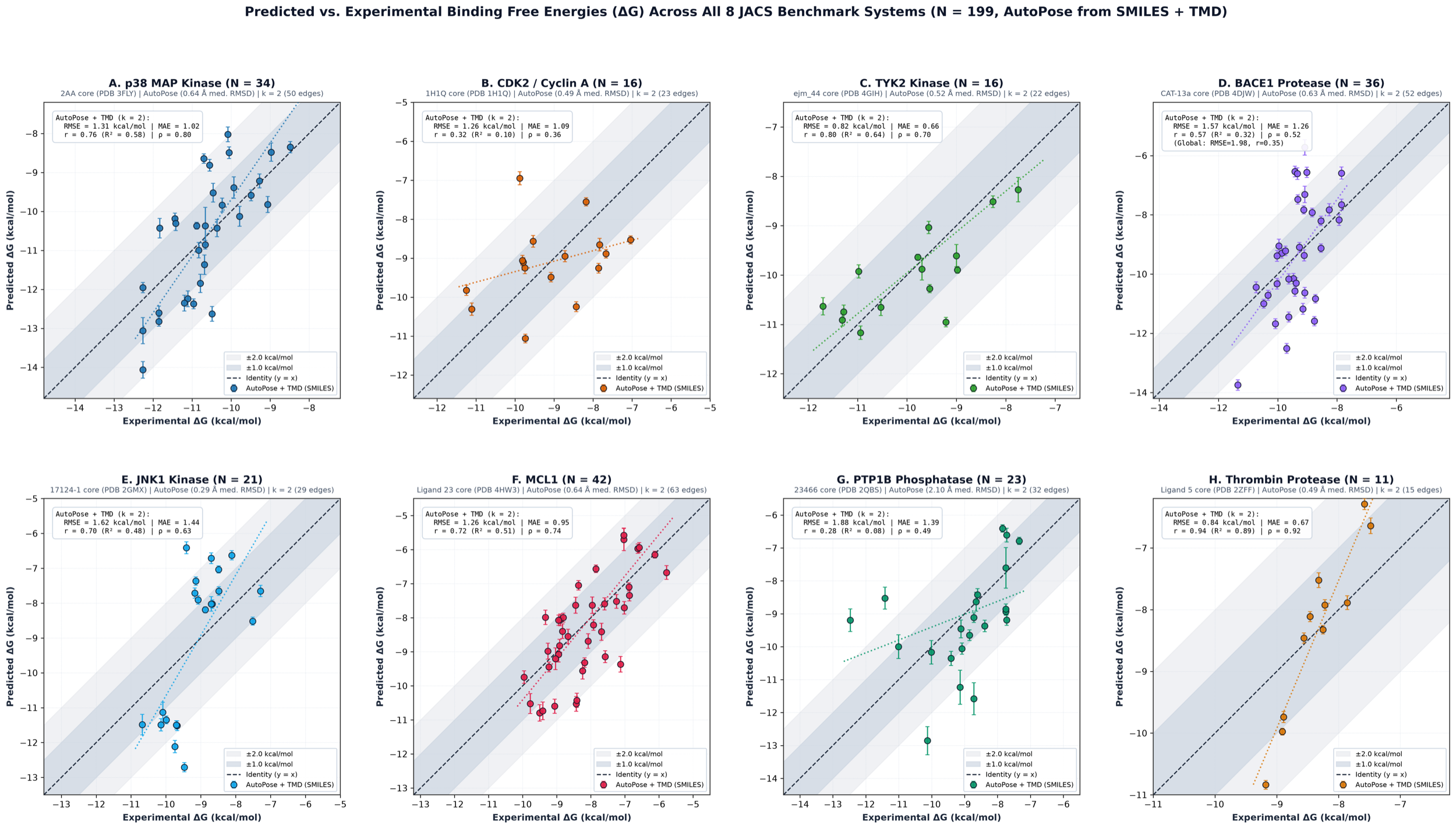
Figure 1 - Predictive performance of LLM-generated FEP input.
However, a few limitations remain. I recently asked an LLM to dock a set of ligands using AutoDock Vina. The LLM happily docked the ligands without ever protonating the protein or the ligand structures. Once I noticed this, I pointed the LLM to a couple of my favorite protonation tools and repeated the process, incorporating what I considered to be best practices.
2. Model Validation: New machine learning methods for drug discovery emerge weekly, but many rely on flawed benchmarks and lack sound statistical comparisons. A major issue stems from datasets like MoleculeNet and the Therapeutic Data Commons (TDC), which aggregate data across dozens or hundreds of studies with inconsistent experimental protocols and label errors. Rather than relying on these noisy, aggregated datasets, I advocate for evaluating models on standardized, high-quality benchmarks, such as the Biogen ADME dataset published by Cheng Feng and colleagues or the datasets produced by OpenADMET.
Because published reports often make it difficult to assess model validity, I prefer to run my own benchmarks using trusted datasets and appropriate statistical methods. Unfortunately, this is often a lot of work. Simply installing the right combination of libraries and getting the software to run can take all day. After installation, I still had to write code to run the benchmark, collect the output, and analyze it.
This frustration led me to develop an agentic approach I call model-validation-central (MVC). With MVC, I gave the agent trusted datasets and pointed it to papers and blog posts I believe reflect best practices. I also provided a specification for a report comparing the new method with the current state of the art. Now I can point the MVC agent to a paper, and it performs the full validation. The agent finds a link to a GitHub repository in the paper, downloads and installs the software, runs the validation using my preferred datasets and statistical best practices, and generates the report. I archive all these reports on my website, where you can view them at this link.
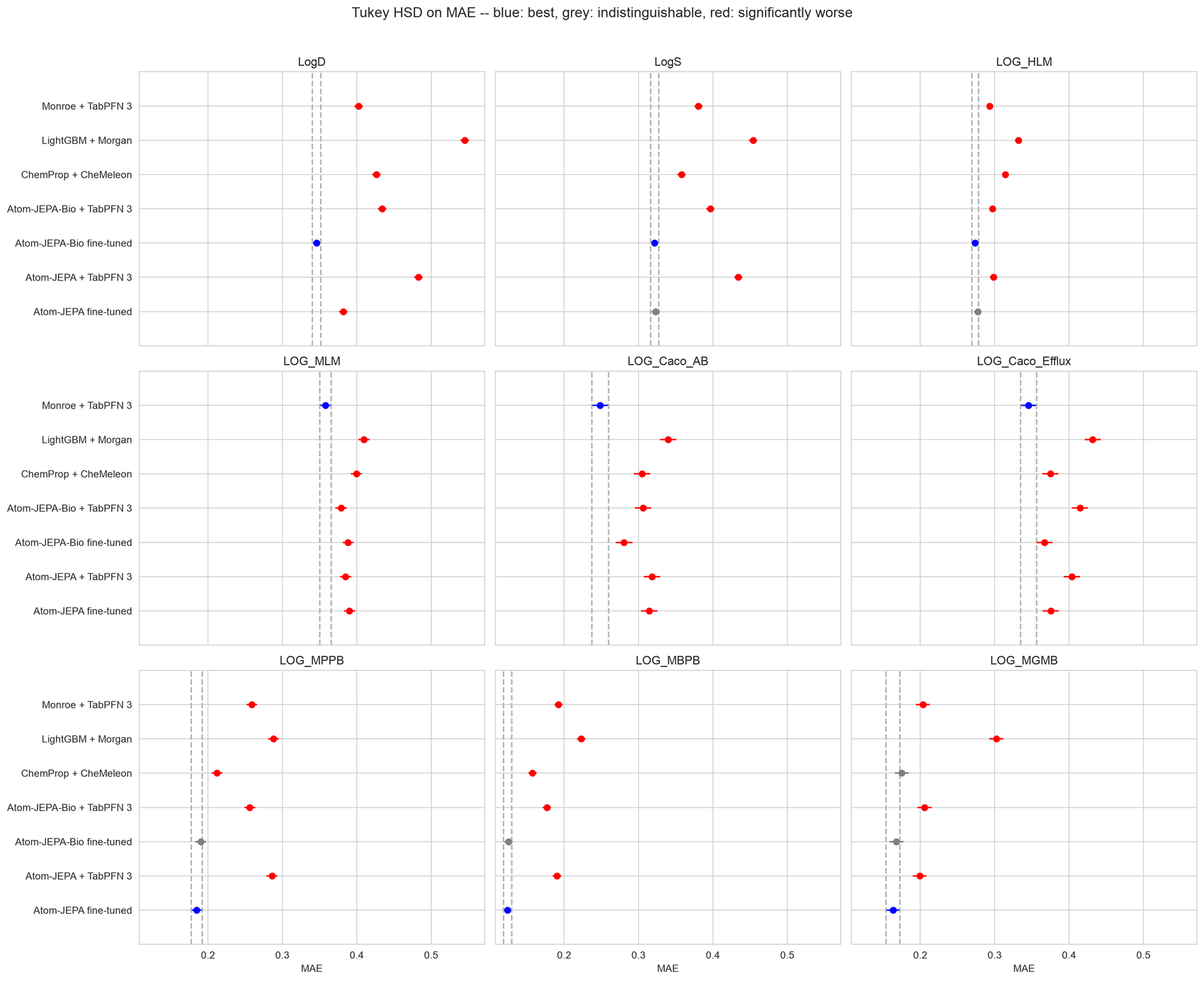
Figure 2 - One example plot from Model Validation Central.
3. Co-folding - One aspect of our work at OpenADMET is evaluating co-folding methods’ performance on off-targets from the Avoid-ome. We’ve been evaluating and fine-tuning Boltz-2, OpenFold3, AlphaFold3, and ESMFold2. This presents a few challenges. First, installing these methods and optimizing performance on the hardware I have available. I found that many of these methods failed to install on systems I had running CUDA 13. A year ago, I spent a lot of time searching the web for the hack needed to set up the cofolding software. However, now with both Claude and Gemini, I can simply ask the LLM to install and optimize the software for my environments. The next challenge is defining the cofolding input. Every program has a different input format; while defining the input isn’t difficult, writing the same input five times is annoying. Using either Gemini or Claude, I simply supplied a protein sequence and a set of ligand SMILES. The LLM set up calculations using multiple co-folding programs, evaluated the results with OpenStructure, and generated a comparative report. TLDR; the results weren’t great.
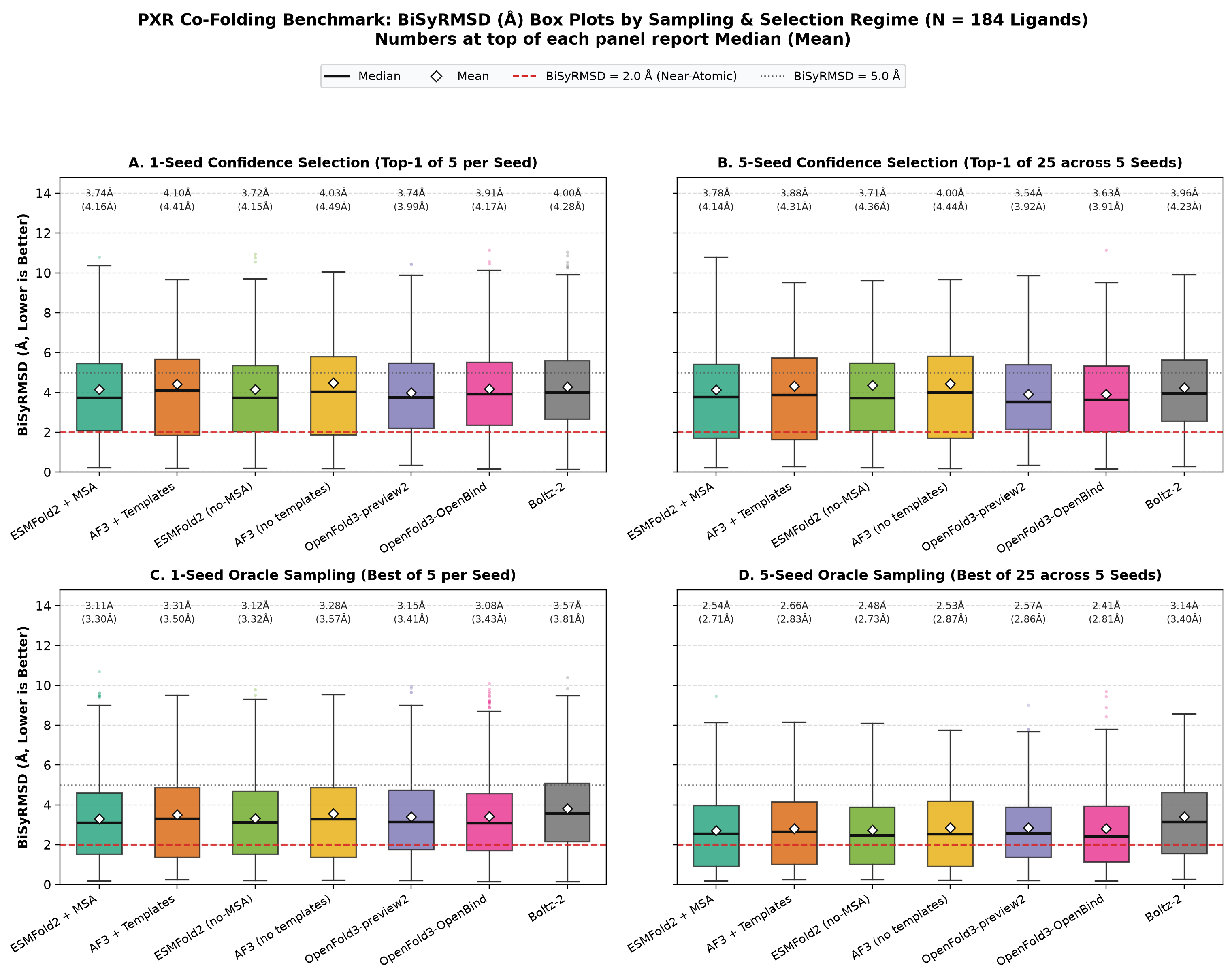
Figure 3 - Predictive performance of co-folding methods on PXR structures from the OpenADMET PXR Blind Challenge.
4. Load Balancing - I handle most of my workload with two Linux systems in my basement: one with an NVIDIA 5070 and 16GB of GPU memory, and another powered by an NVIDIA DGX Spark with 128GB of unified CPU/GPU memory. Before, I manually logged into whichever machine seemed best and wrote scripts to run tasks for a given study. As a result, I wasn’t fully using my hardware setup. A proper queuing system would have solved that, but I never got around to integrating one. Now, with an LLM, I can start a herdr session from my laptop, list the available machines, and describe what needs to be run. I don’t even need to provide each machine’s specs—the LLM evaluates the environment and routes tasks accordingly. If the initial workload split is suboptimal, it can even rebalance jobs dynamically across systems. I’m not sure this approach would work for a large cluster, but it works for my modest setup.
5. Interactive Data Visualization - For over 30 years, I’ve focused on dissecting structure-activity relationships (SAR) to guide compound design. This process involves evaluating assay data and determining how structural modifications affect biological activity and physical properties. At OpenADMET, my current efforts target Avoid-ome targets such as PXR and cytochrome P450s. Decoding the SAR of these targets lets us devise strategies to minimize off-target interactions and train machine learning models to prevent off-target liabilities in optimization programs.
Bridging two-dimensional data with three-dimensional structures has long been a key challenge. As someone focused on structure-based drug design, I previously relied on a split workflow: viewing biological results and 2D chemical structures in a spreadsheet or Jupyter notebook, while visualizing 3D molecular conformations separately in PyMOL. Tools like 3Dmol.js let me embed basic 3D structures in notebooks, but they lacked the customization required for larger structural sets. Toggling between separate applications made it hard to keep data aligned and created friction.
LLMs have transformed this workflow by letting me rapidly build interactive, custom HTML views that dynamically link 2D and 3D data. Models like Claude and Gemini make it easy to slice, dice, and inspect SAR datasets seamlessly. Instead of being constrained by rigid commercial software, I can now build tailored visualization interfaces on demand. A few examples are available here.
6. Plotting - I spent years plotting in Python using seaborn and matplotlib. Even when I knew what I was doing, it still took some trial and error to get plots to look the way I wanted. I’ve found that LLMs are much better at creating plots than I am. My prompts typically get the plots right on the first try.
7. Searching ChEMBL - For the last two decades, the ChEMBL database has been a key resource for the cheminformatics community. It contains more than 25 years of data from the medicinal chemistry literature, including almost 3 million chemical structures and 24.5 million measurements. While the database is useful, it’s also complex, with dozens of linked tables. Although I became relatively adept at the database structure, I often found myself staring at the schema diagram, trying to figure out how to extract what I needed.
Those days are gone. Now I can point Claude or Gemini to the SQLite version of the database and describe what I want to extract or integrate. I extracted all the activity data used in my recent preprint with Björn Mattsson with a simple Gemini prompt. At OpenADMET, we’ve been leveraging these capabilities to develop reference datasets as we implement new assays. I wrote more about using Gemini with ChEMBL earlier this year. Now that DeepMind has released a set of Cheminformatics skills, searching ChEMBL is even easier.
8. Data Integration - The ChEMBL search I described above is only one part of the picture. In many cases, we don’t just want to find chemical structures and associated data in the ChEMBL database; we also want to purchase and test those compounds. For example, OpenADMET is developing a hERG inhibition assay, and we wanted to find commercially available compounds with measured activity to validate our assay. Using an LLM, I asked for a commercial source for the hERG inhibitor set I selected in the previous prompt. The LLM queried commercial sources, found available compounds, and built an order spreadsheet.
9. Improving My Code - While I don’t code as much as I used to, I still maintain a couple of open source projects. My most widely used project is useful_rdkit_utils, a library that adds several “useful” capabilities to the RDKit, including REOS filtering, ring system checks, and some routines for evaluating machine learning models. While the library serves its purpose, it lacked a few key components, including unit tests and up-to-date documentation. Agentic workflows have helped me improve code quality and make it easier for others to download, install, and use the package.
10. Extracting Data From the PDB - A key component of our work at OpenADMET is analyzing the X-ray and cryo-EM structures of key Avoid-ome targets. For example, we just began characterizing aminergic GPCRs, where compound binding can cause a range of off-target liabilities. One of the first targets we’re addressing is 5-HT2B, where agonism can bring about drug-induced valvular heart disease. I wanted to identify and download all the available structures and superimpose them. With a single prompt, I downloaded and aligned the structures. The LLM also extracted ligand SMILES, clustered them, and prepared a report.
While the operational side of the job has become simpler, I don’t think the core work has changed much. It still comes down to asking the right questions and knowing whether the answers make sense. For me, the main difference is scale. Since I no longer have to set up calculations manually, I can try far more ideas than I could before. Of course, the other side of that coin is that I have to sift through a larger set of results. I have to admit that I’m pleasantly surprised by the progress the field has made over the last year. It will be interesting to see where we are a year from now and whether we’re addressing the issues that will truly move the needle in drug discovery.
 How I benchmarked three new chemistry foundation models on two ADMET datasets without cloning a single Git repository.

 Unified index of posts from